FULLY EXPLAINED
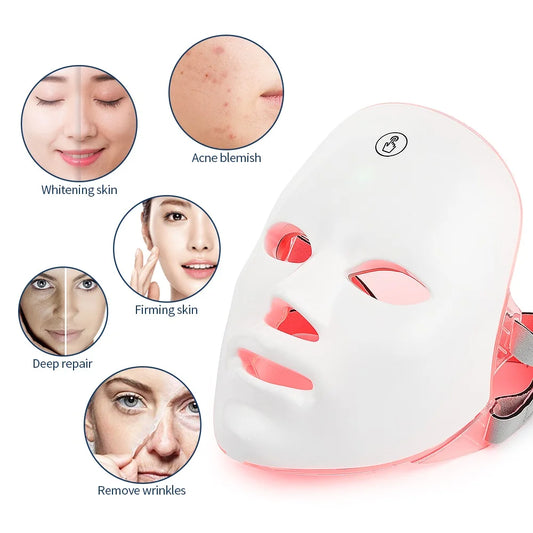
Red light therapy (RLT) masks are wearable beauty devices that use medical-grade Light Emitting Diodes (LEDs) to bathe your skin in specific wavelengths of light. Unlike a chemical peel or laser, these masks are non-invasive and don't use heat to get results.
Here is a breakdown of how they work and what they do:
How It Works (The Science)
- Wavelengths: Most masks use Red light (around 630-660nm) and Near-Infrared light (around 830-850nm).
- Cellular "Battery" Boost: The light penetrates the skin and is absorbed by the mitochondria (the power plant of your cells). This boosts the production of ATP (adenosine triphosphate), which gives cells more energy to repair themselves and produce collagen.
Key Benefits
- Anti-Aging: It stimulates collagen and elastin production, which helps smooth out fine lines and wrinkles over time.
- Inflammation & Redness: Red light is excellent for calming skin, making it a popular choice for people with rosacea or general sensitivity.
- Healing: Near-infrared light reaches deeper tissues, helping to speed up the healing of acne scars or sun damage.
- Acne Control: Many masks also include a Blue light setting, which kills the bacteria (P. acnes) responsible for breakouts.
Design & Usability
- Hard Shell vs. Flexible Silicone: Hard plastic masks are durable but can be heavy; flexible silicone masks (like the popular CurrentBody or Omnilux models) contour to your face for better light-to-skin contact.
- Consistency is King: You won't see results overnight. Most manufacturers recommend using the mask for 10 to 20 minutes, roughly 3 to 5 times a week.
A Quick Reality Check
While these masks are great for maintenance, they are less powerful than the professional panels used in a dermatologist's office. Think of the mask as a "daily vitamin" for your face rather than a "surgical fix."

 Sale
Sale

